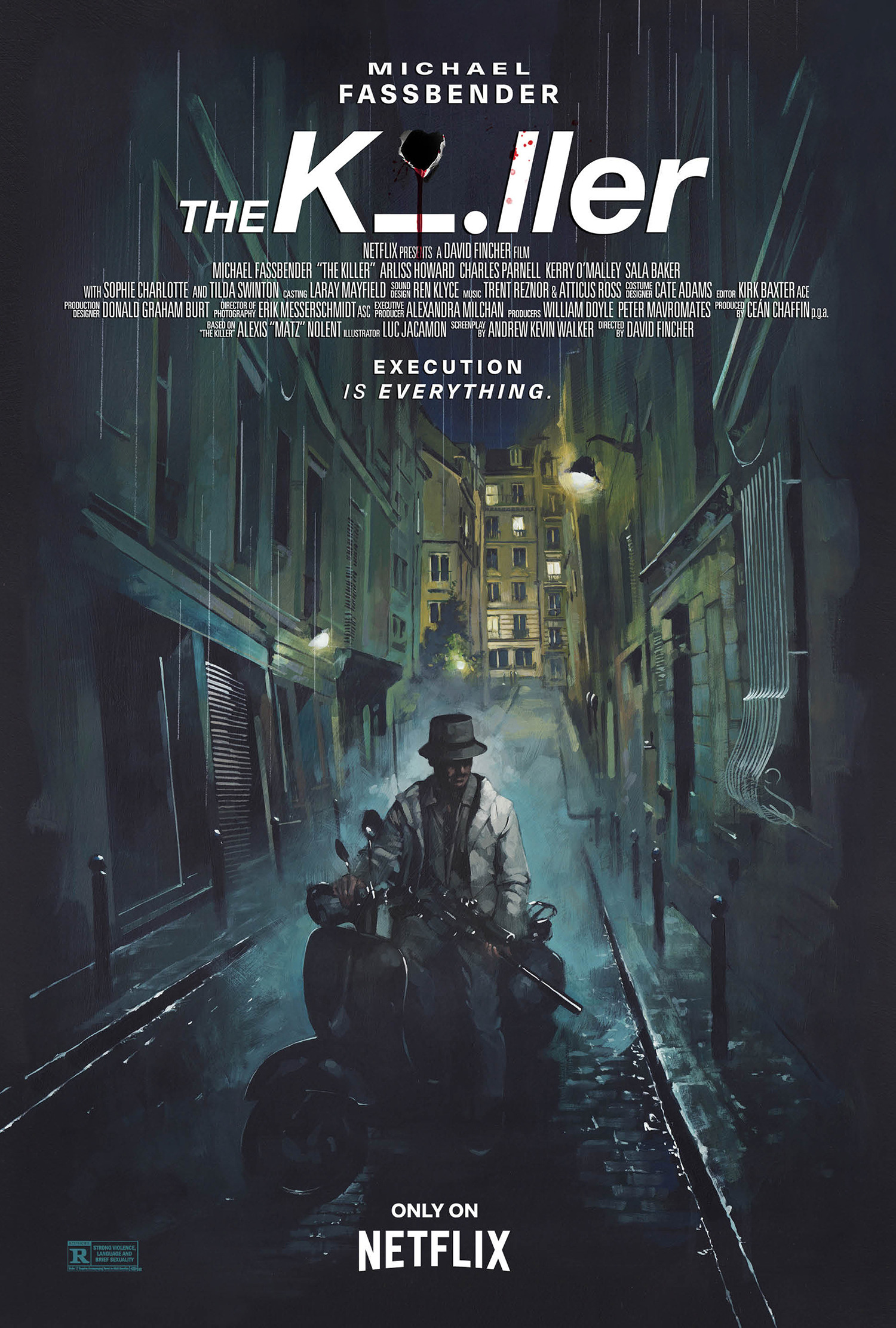
The Killer
"If you are not able to endure boredom, then this work is not for you," the Killer tells us—and then immediately falls asleep.
(Or, to quote Gene Kelly: "Dignity. Always dignity.")
From the meditative and compelling and then, suddenly, hilarious opening montage: it's clear this is a movie about a guy who fucks up even though he tries very hard not to, and to the extent that this film is about anything I think it is about the dissonance between someone trying to be absolutely perfect (perhaps, in the past, having successfully done so) and then what happens when they get, like, three or four very crucial details wrong.
Much commentary has been made about whether this film is a kind of auto-fiction—how much does Fincher see of himself in Fassbender's character? It's a cute and tempting reading. I'm not sure it holds up to much scrutiny; I'm not sure it matters. Much of the text and plot do not occlude light; this is a film about process and vibe, punctuated by being a film about the failures of being purely composed by process and vibe.
Fassbender, it must be said, is absolutely perfect. For a character who delivers the majority of his dialogue as internal monologue, he smashes it out of the park. The failure mode of this kind of film, so drenched in subjectivity and solipsism, is that the protagonist gets forced into a corner where any nuance or interest drains away because they simply must be the superhero who wins every action scene. Fassbender sidesteps this entirely.
I'm reminded of Black Bag, a similar vehicle from a similar director. Black Bag wants to be a parlor mystery; The Killer wears the trappings of Fast and Furious with its frequent locale changes. But I come away from both with the same feeling of benign emptiness. The slickness and cohesion of their production makes them minor classics, but I can't say this is a movie that changed who I am.
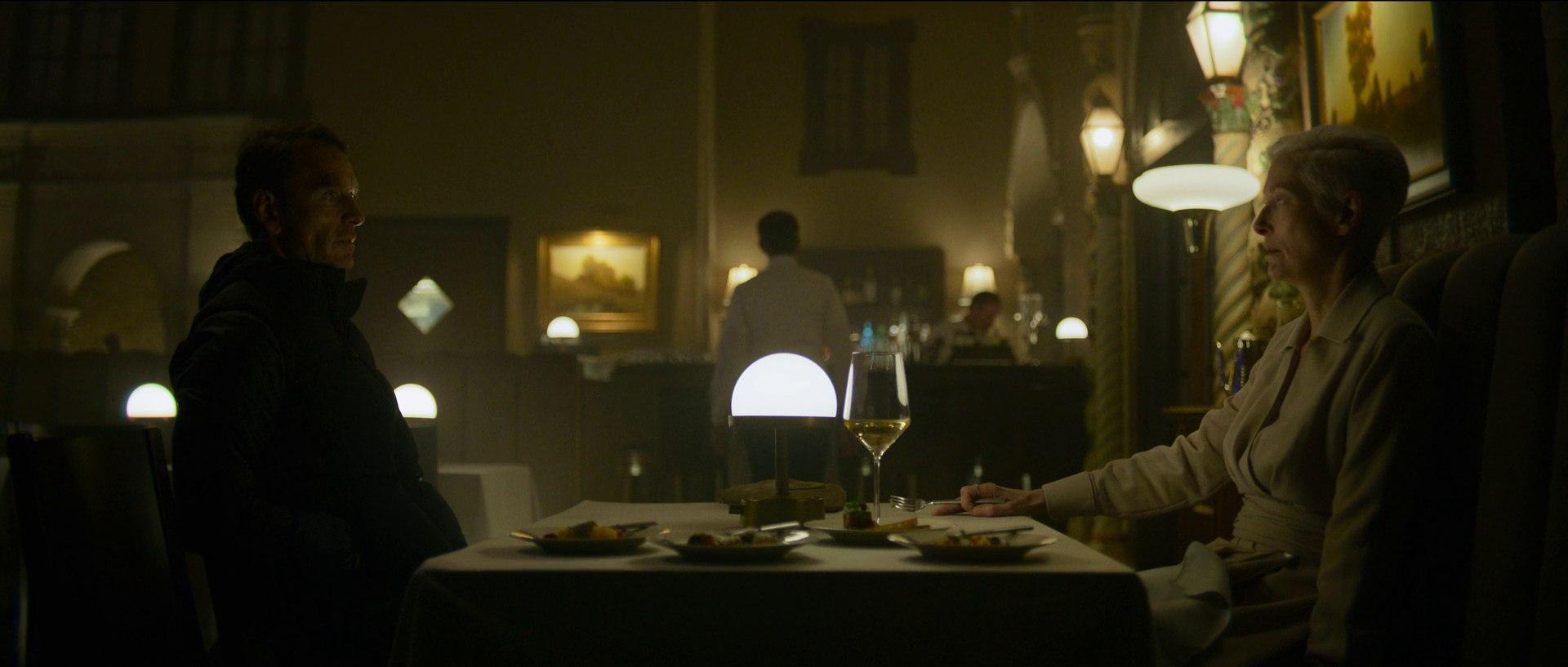
This was a deeply funny movie in a way that frankly took me aback. But the most powerful moments were, as I suspect is common for many viewers, the Tilda Swinton scenes in Beacon, New York. Swinton seems like she's playing a parallel-universe version of her character in Michael Clayton, and the triumph of the scene is not just in her arresting monologue but in Fincher's ability to perfectly put you in Fassbender's seat as she delivers it. Is the request for whiskey coded? Is every step, stumble, or aside a last attempt at escape? You feel clearly that Fassbender envies this person — and yet you see just as clearly that his cold, brutal dispatching is the rational thing to do.
It seems fortuitous that I watched this less than a week after rewatching The Social Network, which I contend may not be the most Fincher movie of all time, but might be the best movie of the 21st century. I don't mean that as a slight against The Killer so much as a binding thread between the two films, especially relative to the rest of his corpus: you can engage with them on a completely surface level and be absolutely enchanted. And yet both seem to offer so much depth and weight beneath that surface.