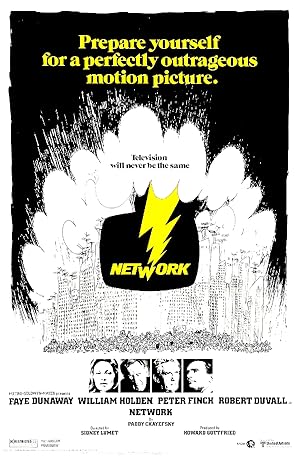
Network
It is perhaps embarrassing to admit that I had never seen Network, and this year — its fiftieth anniversary — felt as good a time as any, especially considering how intimately familiar I already was with the film's plot, its two capstone monologues, and its general influence on culture and, if not journalism itself, then the lens through which we view journalism. And now, having watched it and spent a few days really chewing on what I thought and what I think it means, I have arrived at an idiosyncratic answer:
Institutions, even the ones we revere, will be consumed by forces greater than human understanding. And in so doing, they also consume anyone who has devoted themself fully to those institutions.
The film opens with Howard Beale becoming a childless widower whose sole identity is suddenly that of his news broadcast. Max Schumacher's fall from grace coincides with an off-screen decision not to go with his wife to Seattle to visit his pregnant daughter — instead staying behind in New York to work the news. Paddy Chayefsky himself, for all his great work, was a tyrant with an anger management problem: an absent husband and an absent father.
There is only one character in this film who conducts herself with anything approaching grace and dignity: Beatrice Straight, playing Max's wife, who won her Oscar for a five-minute monologue and then is never seen from again. It is easy and natural to declare Beale and Jensen's rants as prophetic — they are great bits of writing performed radically well — but they are performances by madmen, meant to persuade and to dazzle. Straight is the one whose message is worth keeping close to our heart:
Then get out, go to a hotel, go anywhere you want, go live with her, but don't come back! Because after twenty-five years of building a home and raising a family and all the senseless pain we've inflicted on each other, I'll be damned if I'll just stand here and let you tell me you love somebody else! [...] Is that what's left for me? Is that my share? She gets the great winter passion, and I get the dotage? Am I supposed to sit at home knitting and purling till you slink back like a penitent drunk? I'm your wife, damn it! If you can't work up a winter passion for me, then the least I require is respect and allegiance! I'm hurt! Don't you understand that? I'm hurt badly!
And the most fascinating choice made by the film is the decision not to end with Max's renunciation of Diana — to treat him slinking back sheepishly to his wife and family like the resolution of a B-plot rather than a salvation. As great as the final two scenes of the film are, they reveal that the rot Chayefsky depicts in his film's universe has spread to him as well. Because as soon as a character leaves the newsroom, they are nobody at all to him.