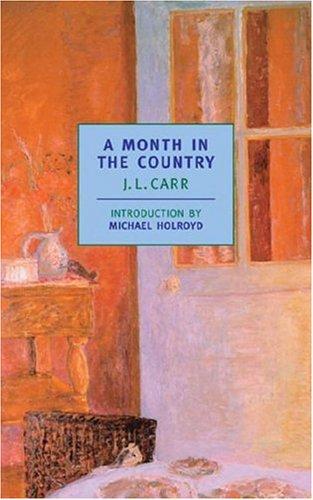
A Month in the Country
Ah, those days...for many years afterwards their happiness haunted me. Sometimes, listening to music, I drift back and nothing has changed. The long end of summer. Day after day of warm weather, voices calling as night came on and lighted windows pricked the darkness and, at day-break, the murmur of corn and the warm smell of fields ripe for harvest. And being young. If I'd stayed there, would I always have been happy? No, I suppose not. People move away, grow older, die, and the bright belief that there will be another marvelous thing around each corner fades. It is now or never; we must snatch at happiness as it flies.
Many of my favorite novels are ones I love and cherish despite their flaws and shagginess. Infinite Jest would be improved with a scalpel, but its ambition and audacity make it easy to forgive the moments that truly should have been left on the cutting room floor.
A Month in the Country is the opposite: perhaps by virtue of its brevity, it is unimprovable. I loved every moment of it and cannot imagine a single change that would result in a better book.
One definition of nostalgia — as everyone learned from Mad Men — is "the pain from an old wound." That is the spirit in which Carr, writing in 1980, depicts post-war England: with the kind of tenderness that only comes from loss.
It's hard to say more about this book, because so much of its virtue, simple as it is, resists explanation; it feels like trying to describe to a friend what made a dream so ineffably sweet. You can read it in an afternoon, and you should do so immediately.